

Seoul | Published 19 February 2026
Former South Korean President Yoon Suk Yeol has been sentenced to life imprisonment after a Seoul court ruled that he masterminded an insurrection by attempting to impose military rule on 3 December 2024.
The court found that Yoon deployed military troops to seal off the National Assembly and ordered the arrest of lawmakers, actions that judges said “fundamentally damaged South Korea’s democracy.”
Presiding judge Ji Gwi-yeon said the former president’s actions were an attempt to subvert the constitution and therefore warranted a harsh sentence. Prosecutors had sought the death penalty.
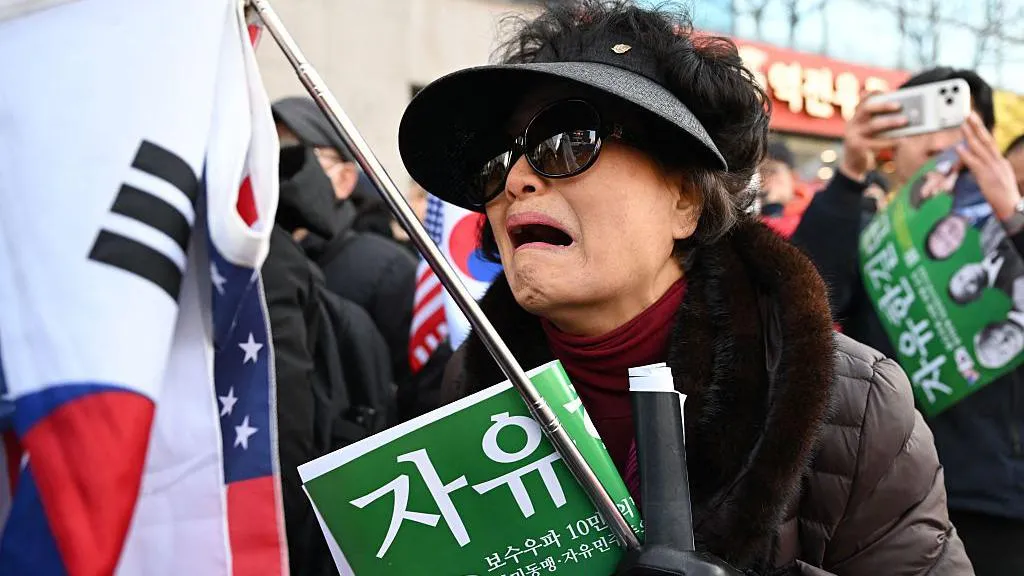
Deeply Polarised Nation
Crowds representing both sides gathered outside the courthouse in Seoul. Supporters held banners reading “Yoon, again,” while anti-Yoon protesters demanded the death penalty.
Many supporters broke down in tears once the verdict was announced.
Yoon, who appeared in court, showed no visible emotion. His lawyers alleged the ruling was “pre-written” and not supported by evidence.
If either side files an appeal, the case will move to the Supreme Court of South Korea, potentially delaying the final verdict for months.
How the Crisis Began
On 3 December 2024, Yoon shocked the nation by declaring martial law live on television. He claimed the move was necessary to protect the country from “anti-state” elements allegedly sympathetic to North Korea.
But prosecutors argued his motive was domestic:
- His government was blocked by an opposition-controlled parliament
- His wife, Kim Keon Hee, faced multiple corruption allegations
Lawmakers ultimately fought their way into the chamber and overturned the martial law order within hours.
What followed were months of political turmoil, Yoon’s impeachment, and a series of indictments targeting his inner circle.
Other Officials Also Jailed
Several top officials in Yoon’s administration were convicted for their involvement in what judges described as “an insurrection from the top.”
- Former prime minister Han Duck-soo – 23 years
- Ex-defence minister Kim Yong-hyun – 30 years
- Former interior minister Lee Sang-min – jailed
- Ex-intelligence commander Roh Sang-won – jailed
- Former police chief Cho Ji-ho – jailed
Security was tight around the courthouse, with 1,000 officers deployed and police buses forming barriers to separate rival groups of demonstrators.
Political Reactions
The ruling Democratic Party of Korea—which returned to power after Yoon’s ouster—criticized the verdict for not imposing the death penalty, calling it a “regression from the people’s revolution.”
Party leader Jung Chung-rae said Yoon had “shaken the very foundations of the nation.”
South Korea has not carried out an execution since 1997, meaning even a death sentence would effectively be life imprisonment.
What Lies Ahead
Yoon is already serving a sentence for abuse of power and obstructing his own arrest. He still faces three more trials related to the martial law crisis.
While several past South Korean presidents were jailed and later pardoned after serving only a few years, it remains unclear whether Yoon will receive similar political leniency.