

LONDON — Russia could regenerate its military forces to pre-2022 levels within three to five years if the war in Ukraine ends, according to Adm. Giuseppe Cavo Dragone, chair of the NATO Military Committee and senior military adviser to Mark Rutte.
Speaking to ABC News at the Chatham House Security & Defence 2026 event, Dragone said Moscow remains capable, resilient, and determined to rebuild after four years of war.
“Right after [a peace deal], I think they will rebuild,” Dragone said. “We are expecting a strong, resilient conventional force.”
Four Years of War: Russia Reconstituting Despite Heavy Losses
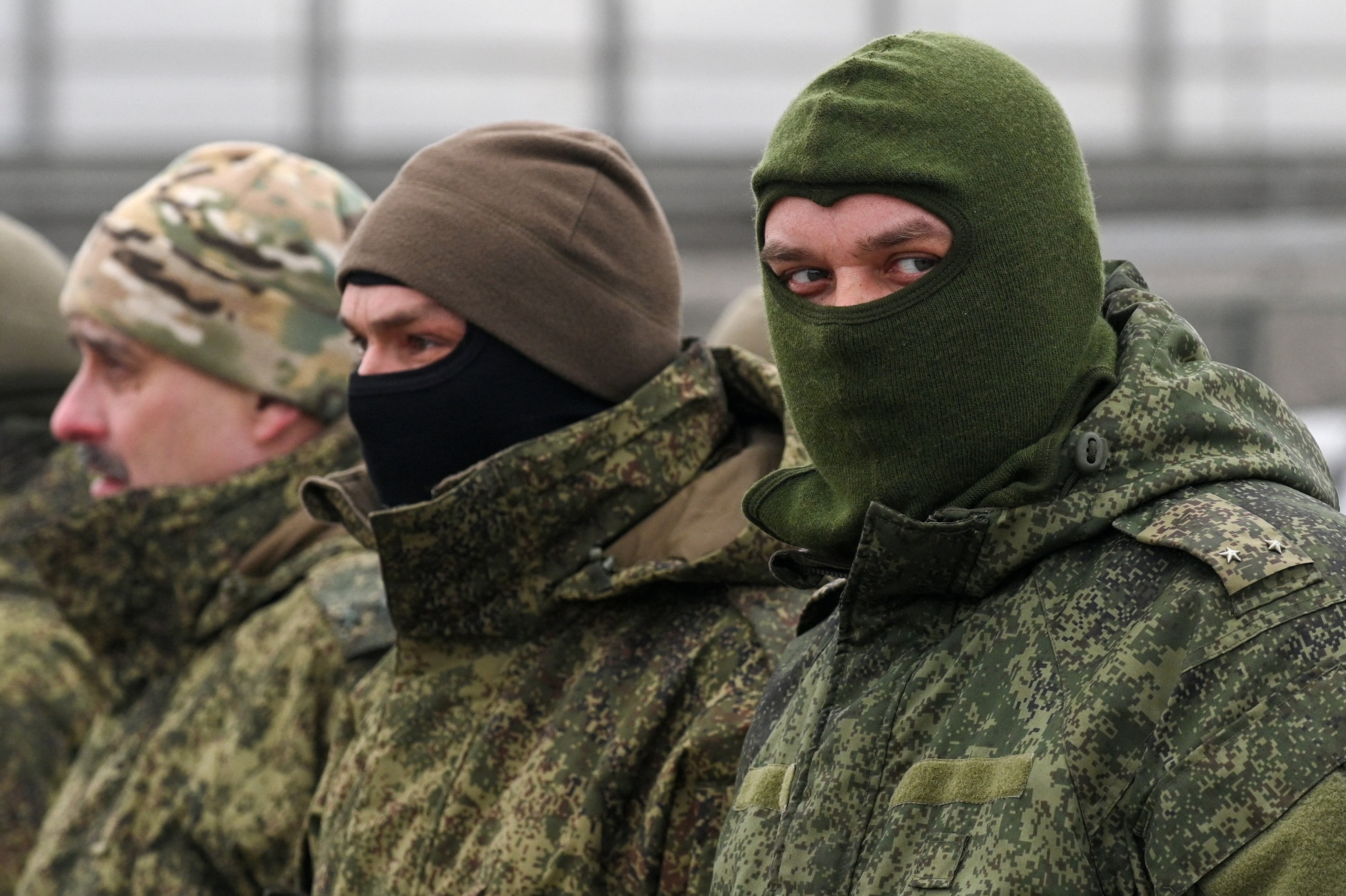
This week marks the fourth anniversary of Russia’s full-scale invasion — a “special military operation” the Kremlin originally expected to conclude in days.
Dragone said Russia’s early failures surprised NATO:
“Their capabilities were way below what we expected at the beginning,” he said. “But in four years, they reconstituted… they lost a lot of soldiers, but they are able to rebuild and recruit.”
Despite enormous casualties and slow territorial gains, Moscow continues to push forward along the 750-mile frontline.
According to Western and independent estimates, Russia suffered 35,000 casualties in November–December alone, often losing “thousands of soldiers for one kilometer,” Dragone said.
Putin Demands Donbas, Ukraine Says Russia Is Not Winning
Russian President Vladimir Putin insists that Kyiv must surrender the entire Donbas — Luhansk and Donetsk — as part of any peace deal.
Ukraine and its allies reject this narrative, emphasising Russia’s limited progress, mounting losses, and the strain on the Kremlin’s war-economy.
“They are not winning, except for these small gains,” Dragone said. “It’s an oxymoron to call something a ‘special military operation’ that lasts five years.”
He added Russia cannot capture all of Donbas by the end of 2026 at the current pace.
Moscow’s War Economy and Future Military Ambitions
Russia has placed its national economy on a wartime footing.
Dragone noted:
- Over 40% of Russia’s national budget now goes to the war
- Moscow may maintain a war economy even after a ceasefire
- Russia could seek to rebuild its forces to 150% of their pre-invasion strength, preparing for long-term confrontation with NATO
“They are testing us… testing our reaction times,” Dragone said.
Hybrid Warfare Already Underway

Dragone said Russia is waging a hybrid war against NATO states, involving sabotage, surveillance, cyber activity, assassinations, and drones or missiles that regularly violate allied airspace during strikes on Ukraine.
“This is an unfair confrontation,” he said. “We have moral, ethical, and legal restraints — they do not.”
Still, he stressed that NATO will not abandon those standards.
Nuclear Threats Return as Kremlin Escalates Rhetoric
Russia continues to issue nuclear threats. This week:
- The SVR accused Ukraine — without evidence — of trying to obtain nuclear weapons with help from the United Kingdom and France
- Former Russian president Dmitry Medvedev threatened a “symmetrical response” using “any weapon, including non-strategic nuclear weapons”
Dragone said NATO is monitoring closely:
“We are concerned, but nothing has changed.”
NATO’s Role: Political Decision, Military Execution
Asked whether NATO has been too hesitant in supporting Ukraine, Dragone said such decisions lie with political leaders.
“They give the political direction, what effect they want — and we will produce this effect.”
He stressed again: NATO remains a defensive alliance.