

Geneva — Delegations from Russia and Ukraine met in Geneva on Tuesday for a fresh round of U.S.-brokered peace talks, just one week before the fourth anniversary of Russia’s full-scale invasion.
Expectations remain low, with both sides refusing to shift on core issues like territory, security guarantees, and the status of occupied regions — despite the United States pushing for a settlement by June.
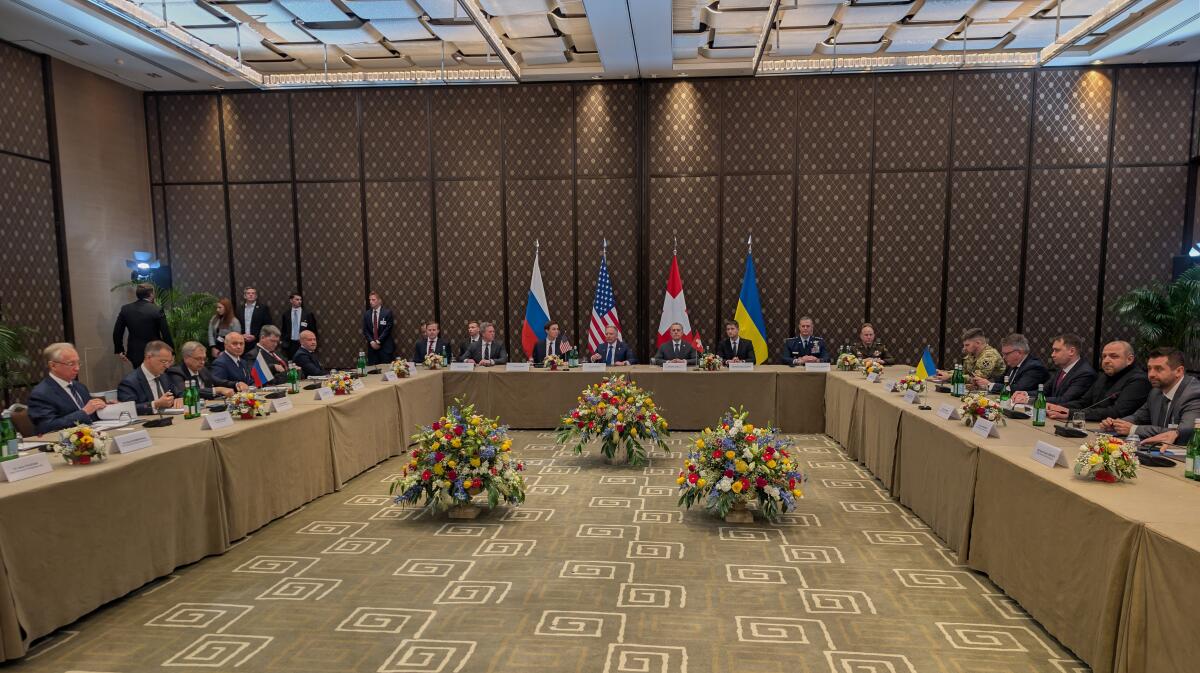
Ukrainian delegation head Rustem Umerov shared images of all three delegations seated across from one another in a horseshoe-shaped table setup, with U.S. envoy Steve Witkoff and Trump adviser Jared Kushner seated at the head beneath U.S., Russian, Ukrainian, and Swiss flags.
“The agenda includes security and humanitarian issues,” Umerov said. “We work without excessive expectations.”
⚠️ Tough Territory Talks Ahead
A source familiar with the discussions told AP that negotiations over Russian-occupied Ukrainian lands will be the most difficult part of the talks.
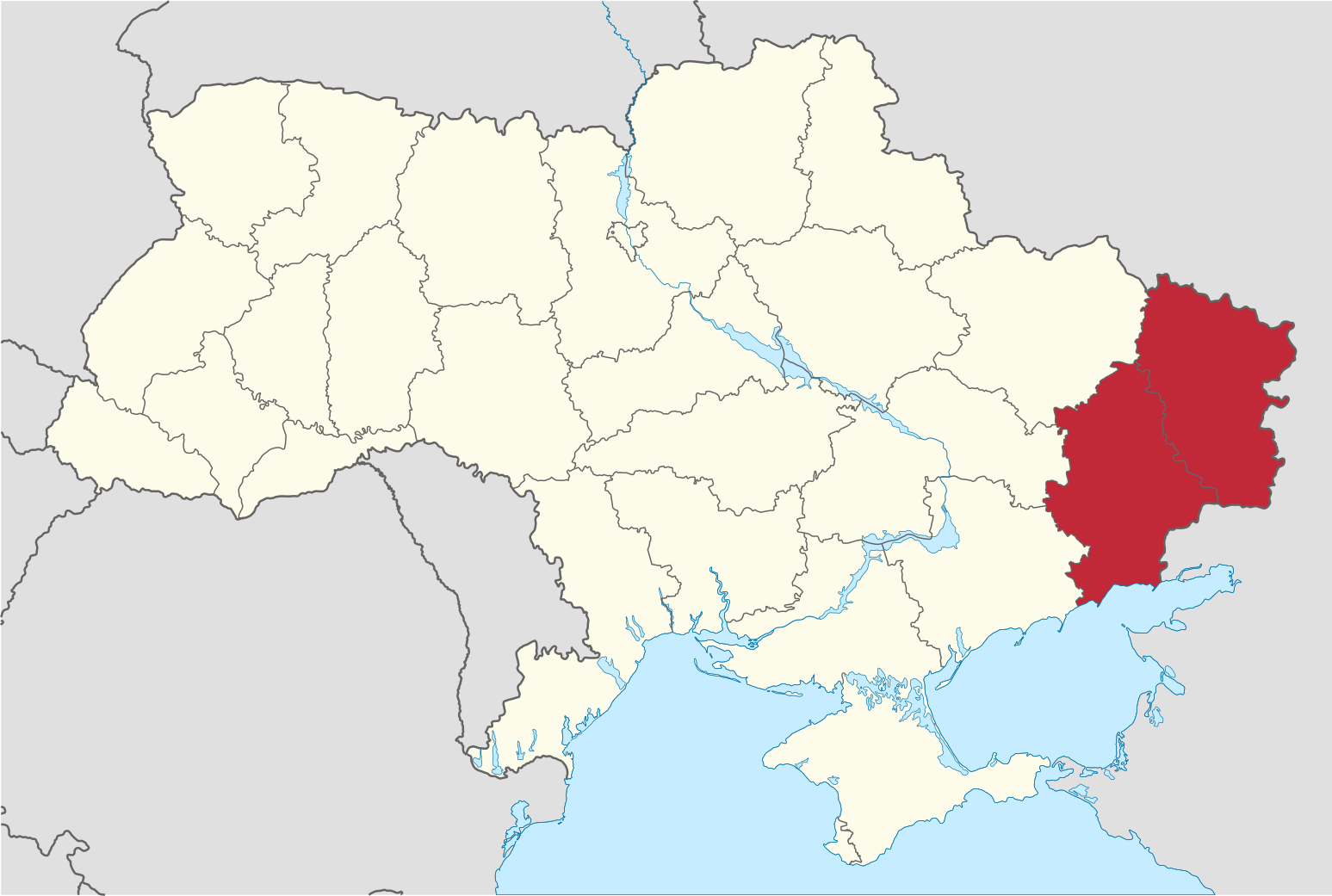
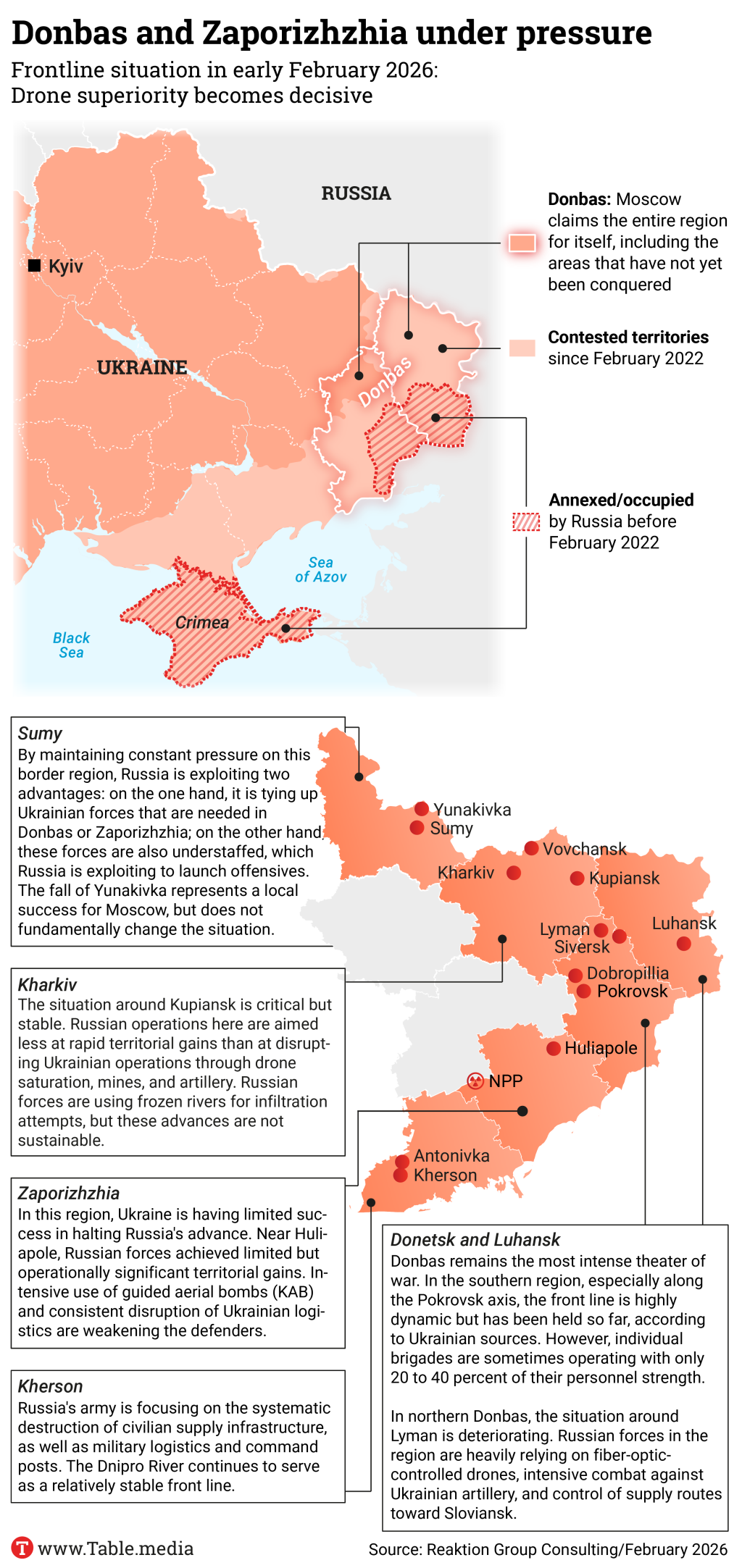
Russia continues to demand that Ukraine relinquish control of the Donbas region.
Also present in Geneva are top military chiefs from the U.S., Russia, and Ukraine, who will examine how a post-deal ceasefire monitoring system could work — including options for a demilitarized zone and military communication channels.
🇺🇸 Trump Calls Them “Big Talks”
Former U.S. President Donald Trump called the Geneva meeting “big talks.”
Asked what he expected from the negotiations, he pointed directly to Ukraine:
“Ukraine better come to the table fast,” Trump told reporters aboard Air Force One.
It remains unclear what Trump meant, as Kyiv has consistently participated in all negotiation rounds.
🇺🇦 Ukraine Under Relentless Attacks
Ukraine’s depleted army continues to fight along a 750-mile front line, while civilians suffer nightly Russian airstrikes targeting:
- Power grids
- Residential areas
- Infrastructure across 12 regions
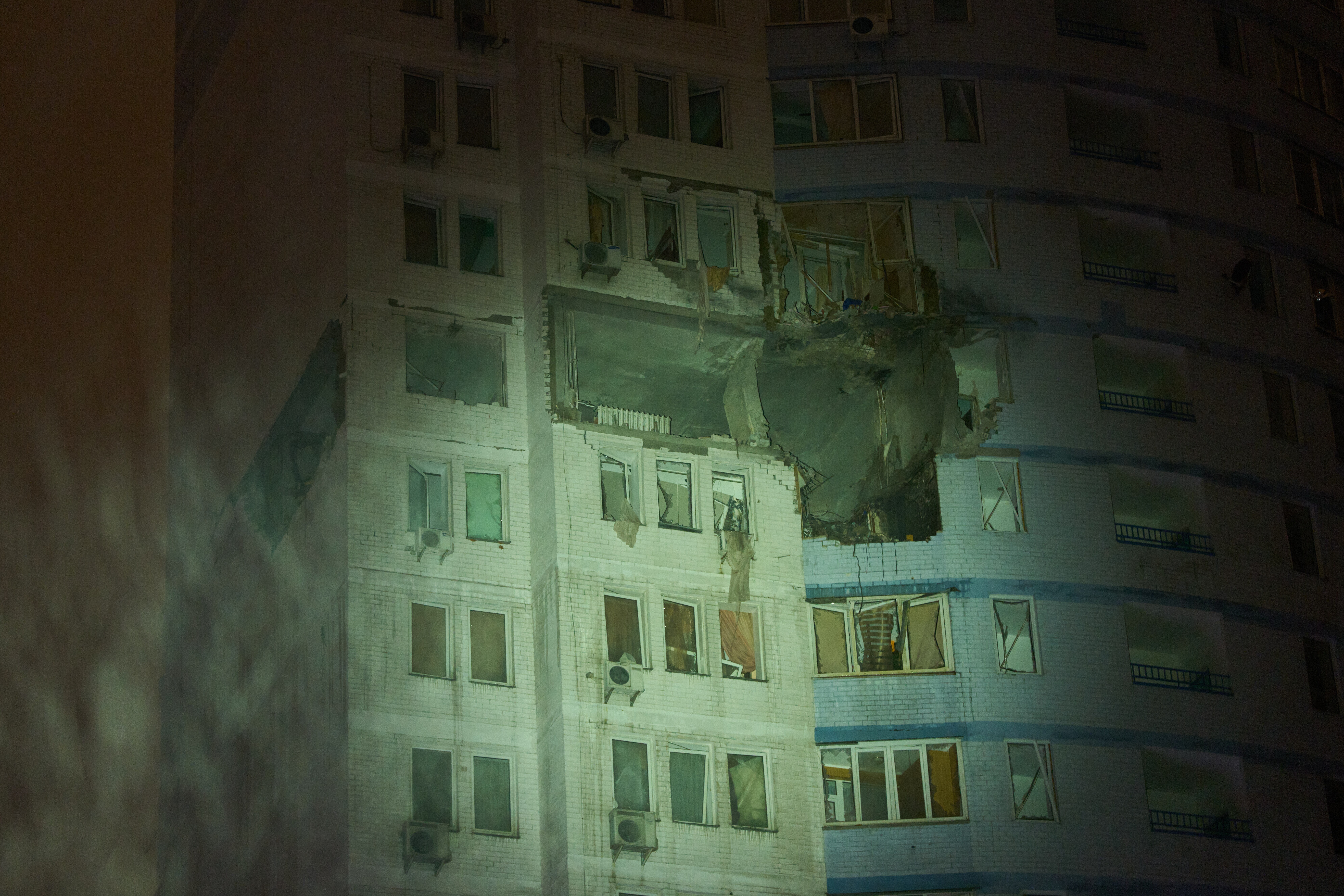
Overnight, Russia launched nearly 400 drones and 29 missiles, injuring at least nine people, including children.
In Odesa, tens of thousands lost heating and water.
President Volodymyr Zelenskyy condemned the attacks:
“The more this evil comes from Russia, the harder it will be for everyone to reach any agreements.”
Zelenskyy said Kyiv accepted all realistic U.S. proposals, including an unconditional, long-term ceasefire.


🇷🇺 Who Leads the Russian Team?
Russia’s delegation is headed by Vladimir Medinsky, adviser to President Putin.
Medinsky led Moscow’s first negotiation team during the Istanbul 2022 talks and has strongly defended Putin’s territorial goals.
He is also known for writing nationalist history books criticizing Western influence and attacking Ukraine’s statehood.
🇺🇸 U.S. Military Representation
Representing the U.S. military in Geneva:
- Gen. Alexus Grynkewich, Commander of U.S. & NATO forces in Europe
- U.S. Army Secretary Dan Driscoll
They are expected to meet their Russian and Ukrainian counterparts to discuss:
- Ceasefire mechanisms
- Monitoring procedures
- Steps needed to implement any final agreement
🧭 Core Issues Driving the Talks
1. Future of Occupied Territory
Russia controls or claims nearly 20% of Ukraine.
Kyiv insists sovereignty is non-negotiable.
2. Security Guarantees
Ukraine demands strong U.S.-backed guarantees to prevent future invasions.
3. Ceasefire Enforcement
Military leaders are mapping out possible frameworks for a stable truce.
🕊️ A Difficult Road Ahead
Even as the Geneva talks resumed, U.S. officials held separate, indirect talks with Iran elsewhere in the city — underlining the intense global diplomatic activity centered in Switzerland this week.
But for Russia and Ukraine, the path remains steep.
With war still raging and airstrikes intensifying, meaningful breakthroughs in Geneva may take time.