

Dhaka – February 2026
The Bangladesh Nationalist Party (BNP) has secured a sweeping victory in Bangladesh’s first general election since the 2024 Gen Z-led uprising that toppled long-time Prime Minister Sheikh Hasina.
According to local broadcasters, the BNP-led coalition won 209 seats in the 300-member Jatiya Sangsad, granting it a commanding two-thirds majority and a strong mandate to form the next government.
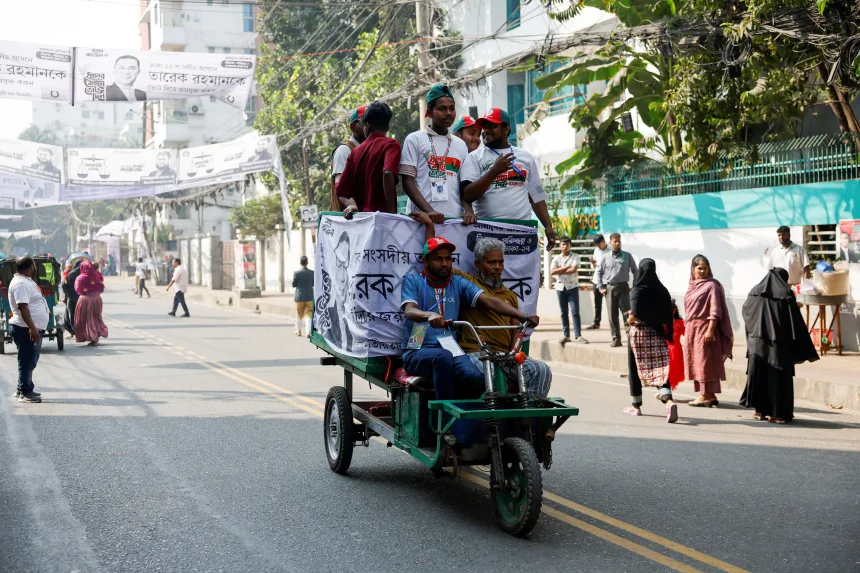
The vote, held Thursday, was widely viewed as critical for restoring political stability in the Muslim-majority nation of 175 million after months of unrest disrupted daily life and key industries — including the garment sector, where Bangladesh is the world’s second-largest exporter.
A Pivotal Election
The election marked Bangladesh’s first national vote since the youth-driven protests that forced Hasina from office after more than 15 years in power. The uprising, led largely by under-30 activists, reshaped the country’s political landscape and triggered calls for sweeping reforms.
Turnout was estimated at over 60%, significantly higher than the 42% recorded in the last election. More than 2,000 candidates contested the polls, representing at least 50 parties — a national record.
Soon after confirming its majority, the BNP issued a statement thanking voters and urging supporters not to hold celebratory rallies. Instead, it called for special prayers across mosques, temples, churches and pagodas for the welfare of the country.
Leadership and Promises
The BNP is led by Tarique Rahman, son of former Prime Minister Khaleda Zia and former President Ziaur Rahman.
Campaign pledges included:
- Financial assistance for low-income families
- A 10-year cap on holding the office of prime minister
- Expanded foreign investment to boost the economy
- Stronger anti-corruption measures
Opposition Concedes
The Islamist Jamaat-e-Islami, the BNP’s main rival, conceded defeat after its alliance secured 68 seats. Party leader Shafiqur Rahman pledged “positive politics” rather than obstruction.
The youth-led National Citizen Party (NCP), formed by activists who played a key role in the uprising, won five of the 30 seats it contested as part of the Jamaat alliance.
Meanwhile, Hasina’s Awami League — which governed Bangladesh for over a decade — was barred from contesting the election.
Constitutional Reform Referendum
Alongside the parliamentary vote, citizens also cast ballots in a referendum on sweeping constitutional reforms. Proposals included:
- Establishing a neutral interim government during election periods
- Creating a bicameral parliament
- Increasing women’s representation
- Strengthening judicial independence
- Introducing a two-term limit for prime ministers
Preliminary reports from leading daily The Daily Star indicated that 73% of referendum voters supported the reforms, though official results have yet to be confirmed.
Hasina Rejects Result
Hasina, currently in self-imposed exile in India, denounced the election as a “carefully planned farce,” arguing that it was conducted without genuine participation and under restrictions on her party.
She called for the vote’s cancellation and demanded a fresh election under a neutral caretaker government.
Critics of her administration, however, maintain that previous elections during her tenure were frequently marred by opposition boycotts and allegations of intimidation.
Regional Implications
The election outcome could reshape Bangladesh’s foreign policy at a time of shifting regional dynamics. Relations with India have cooled since Hasina’s departure, potentially opening space for China to expand its influence in the strategically important South Asian nation.
With a decisive mandate and high public expectations, the BNP now faces the challenge of delivering political stability, economic recovery, and institutional reform in a country still emerging from a turbulent chapter in its democratic history.