

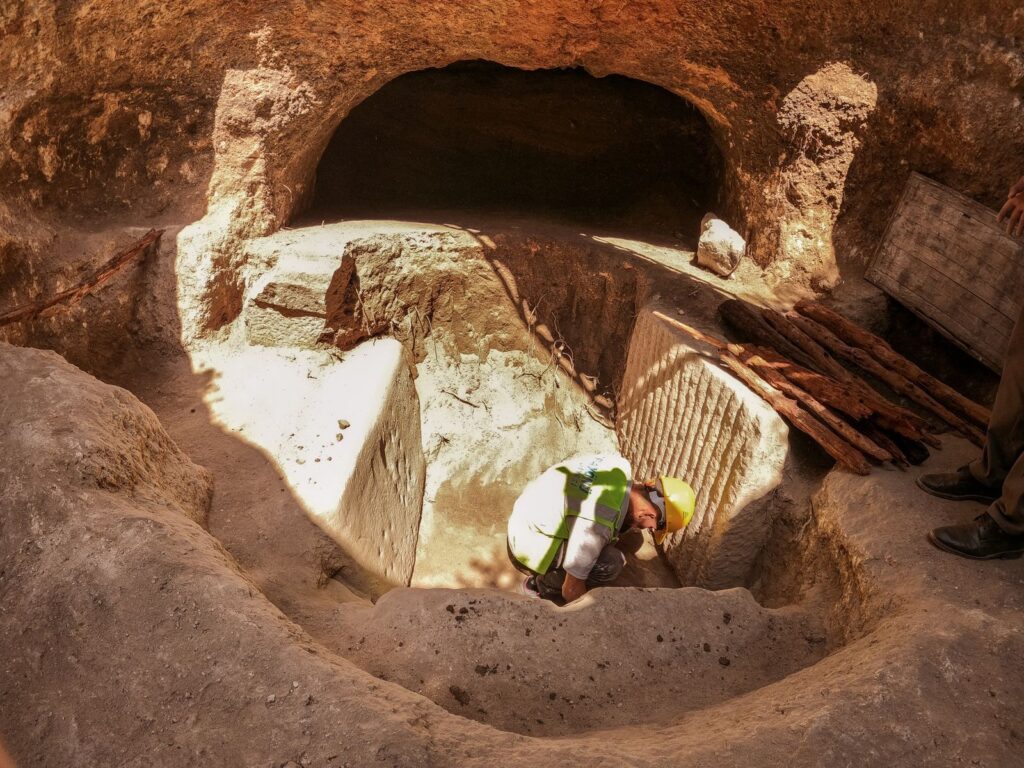
Archaeologists announced the discovery of ceramic pieces near the site believed to be Noah’s Ark on Mount Ararat in Turkey. Workers found the fragments during road construction near the Durupinar Formation, a 538-foot-long boat-shaped structure that has sparked debate for decades.
Prof Dr Faruk Kaya of Agri Ibrahim Cecen University stated that humans created the pieces between 5,000 and 7,000 years ago, during the Chalcolithic period. He noted that the dating roughly coincides with traditional estimates of the biblical figure’s lifetime.
Dr Kaya emphasised that ancient settlers left clear evidence of settlement in the ceramics and added that the find may support theories linking the landmark to Noah’s Ark. He reportedly urged authorities to protect the site and halt the removal of rocks or stones, warning that both human activity and natural erosion could damage the formation.
Previously, independent researchers using ground-penetrating radar identified a 13-foot tunnel within the structure and detected three subterranean layers resembling the biblical ark’s decks. According to reports, the layers appear to match the description in Genesis 6:16, which details the ark’s lower, second, and third decks.
Turkish media and international outlets, including the New York Post, have reported the discovery. Experts indicate that the fragments add context to ongoing studies, while emphasising the importance of preserving the site for both heritage and scientific research.