

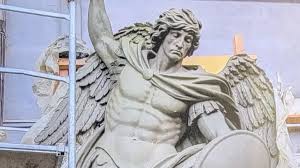
A Massachusetts trial court judge has issued an order blocking the installation of statues of St Michaelthe Archangel and St Florian on a new public safety building in the city of Quincy.
The 10-foot high bronze statues which was scheduled to be installed on the building’s facade this month, need to await a higher court’s decision.
The statues, estimated to cost $85,000, are part of a new $175 million public safety building that will house the police headquarters and administrative offices for the fire department in the Boston suburb.
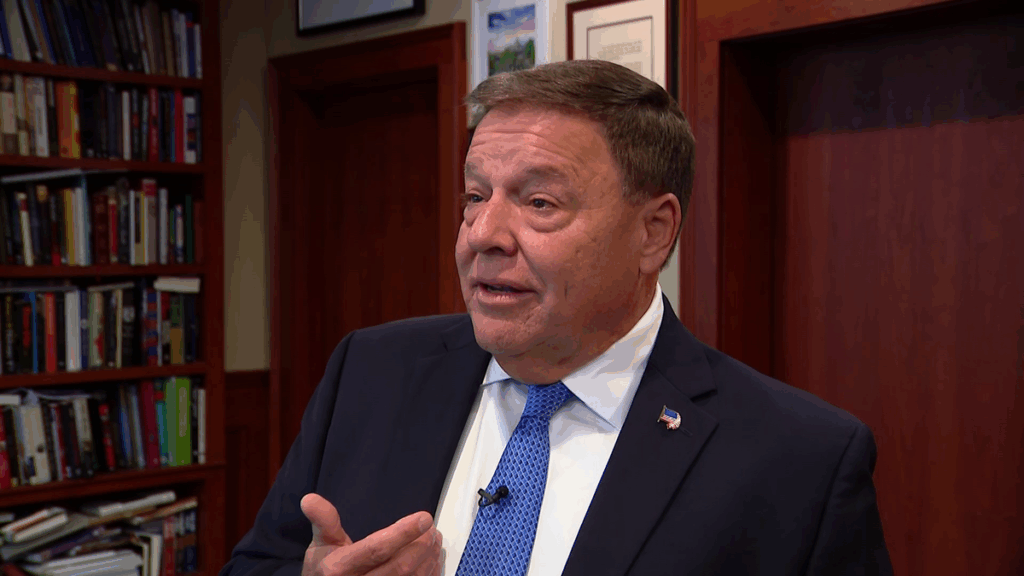
Quincy Mayor Thomas Koch, a practicing Catholic, explained that he chose St. Michael and St. Florian because they are the patron saints of police officers and firefighters, respectively — not as a statement about religion.
On October 14, Norfolk County Superior Court Judge William Sullivan wrote in a 26-page rulling that the complaint here plausibly alleges that the statues at issue convey a message endorsing one religion over others. He noted that the sttaues reperesent two Catholic saints and it can’t be seperated from the saint’s Catholic connections.
The judge wrote that the 15 city residents, represented by the American Civil Liberties Union of Massachusetts, who filed the lawsuit against the statues, have presented facts that plausibly suggest an objective observer could see the statues on the façade of the public safety building as primarily endorsing Catholicism or Christianity and conveying a distinctly religious message.
Rachel Davidson, staff attorney at the ACLU of Massachusetts shared that the rulling affirms the bedrock principle that our government cannot favour one religion above others or religious beliefs over non religious beleifs.
The mayor shared in a written statement that the city will appeal. They chose the statues to honor the first responders ans not to promote any religion.
The lawsuit, which was filed May 27 in Norfolk County Superior Court in Dedham, relies on the Massachusetts Constitution, not the U.S. Constitution, but there is a tie-in.
In 1979, the Massachusetts Supreme Judicial Court adopted the U.S. Supreme Court’s Lemon test for church-state cases, later adding a fourth criterion addressing political divisiveness. However, the U.S. Supreme Court overturned the Lemon test in 2022 in Kennedy v. Bremerton. If the Massachusetts high court agrees to hear the Quincy statues case, it would mark its first ruling on such an issue since the Kennedy decision.