
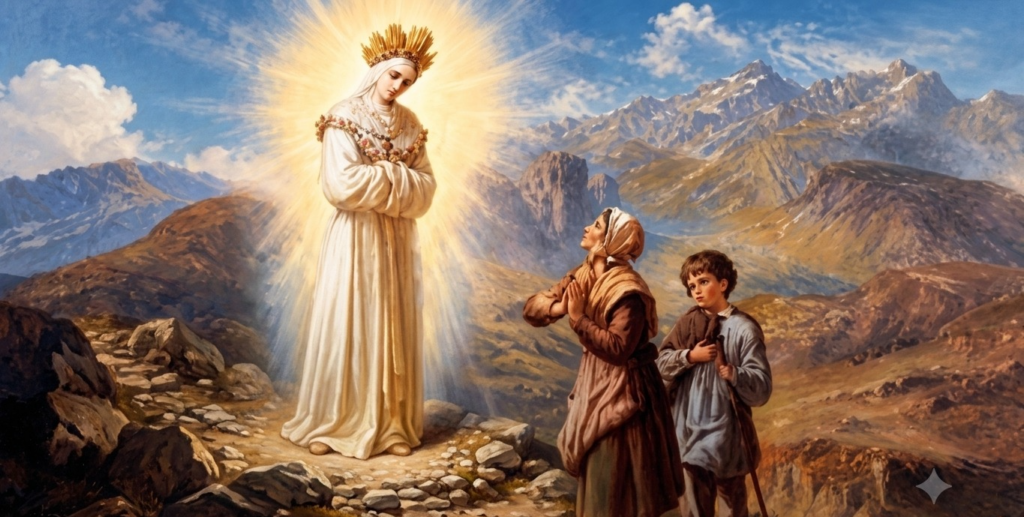
High in the French Alps, two young shepherds encountered a sight they would never forget… a beautiful lady — sitting and weeping. On September 19, 1846, eleven-year-old Maximin Giraud and fourteen-year-old Mélanie Calvat were tending cattle near the village of La Salette in France. The children said they saw a woman surrounded by brilliant light — her face buried in her hands, in tears. She then stood and spoke to them: “Come near, my children; do not be afraid.” The children identified the beautiful lady as the Blessed Virgin Mary. Her message was serious, but also deeply maternal — a call to conversion, prayer and a return to God.
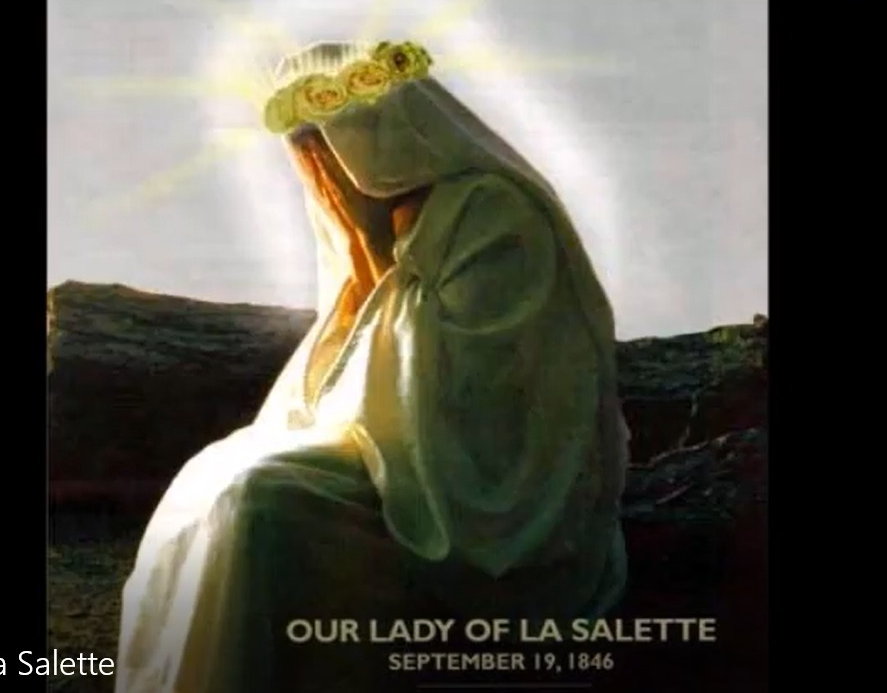
MORE THAN 180 YEARS LATER, HER TEARS STILL SPEAK OF CHRIST’S MERCY
Mary spoke of her Son and called people away from sin and indifference. And before departing, she entrusted the children with a mission: to make her message known to her people. After five years of investigation, the Bishop of Grenoble, Philibert de Bruillard, recognized the apparition as authentic. The apparition received official approval from the Catholic Church in 1851, and a shrine was later established at the site where Mary was said to have appeared. Her message also called the faithful to a deeper life of prayer and penance — including daily prayer of the Rosary and Friday fasting — while reminding priests of their responsibility to pursue holiness and lead their people by example. But perhaps the most powerful image of La Salette remains Mary’s tears. Pope Francis once reflected that those tears recall the tears of Jesus over Jerusalem and his anguish in Gethsemane — a reflection of Christ’s sorrow and an invitation to trust in God’s mercy.
More than 180 years later, the message of La Salette remains simple: return to God. Return to prayer. Return to her Son. Because behind the tears of the Mother is not despair… but a mother’s desire to lead her children back to Christ.
Leave a Reply