

Sri Lanka’s Criminal Investigation Department (CID) on Wednesday arrested former intelligence chief Retired Major-General Suresh Sallay in connection with the 2019 Easter Sunday suicide bombings, one of the deadliest attacks in the nation’s history.
According to police, Sallay was taken into custody at dawn from a suburb of Colombo.
Preliminary reports indicate investigators are examining allegations that he had links with members of the Islamist extremist group responsible for the coordinated attacks and had allegedly met them prior to the bombings.
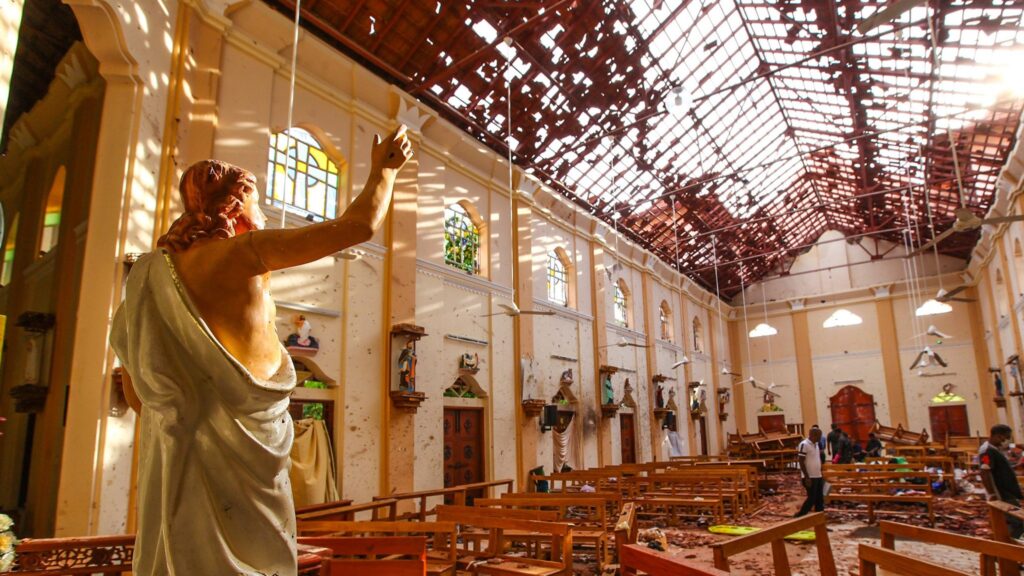
The 2019 Easter Sunday attacks, carried out on April 21, targeted churches and luxury hotels, killing 279 people and injuring hundreds more.
Images from the aftermath — including at Zion Church in Batticaloa — show widespread destruction as security forces and forensic teams combed through debris.
The arrest marks a major escalation in the long-running investigation, which has drawn significant domestic and international attention, particularly from victims’ families seeking accountability.
Allegations of Prior Contact With Bombers
Investigators are probing claims—reported earlier in court documents and by several inquiry panels—that Sallay had links with members of the National Thowheed Jamaath (NTJ), the extremist Islamist group responsible for the coordinated suicide attacks.
Some witnesses have alleged that Sallay met certain individuals from the bomber network before the attacks. Authorities are now examining:
- Whether he had prior knowledge of the plot
- Why actionable intelligence was not effectively used
- Whether any intelligence failures were deliberate or due to systemic breakdown
CID officials say they now have “sufficient grounds to proceed” based on new evidence presented this month.
Background: One of Sri Lanka’s Deadliest Attacks
The Easter Sunday bombings on April 21, 2019, targeted:
- St. Anthony’s Shrine in Colombo
- St. Sebastian’s Church in Negombo
- Zion Church in Batticaloa
- Three major hotels in Colombo
A total of 279 people died, including dozens of foreign nationals, making it one of the worst terrorist attacks in South Asia in the last decade.

Long-Standing Accusations and Political Sensitivity
For years, families of victims, Christian clergy, and civil society groups have claimed that the Sri Lankan state apparatus failed to prevent the attacks despite receiving multiple foreign intelligence warnings.
Several political figures and senior officials—including Sallay—were repeatedly mentioned in:
- Presidential Commission of Inquiry (PCoI) testimonies
- Catholic Church reports
- Independent investigations
The Catholic Church, led by Cardinal Malcolm Ranjith, has been demanding prosecutions, stating that “key individuals who knew more than they revealed” must be held accountable.
Significance of the Arrest
The arrest is seen as one of the most significant developments in the seven-year-long investigation. This is the first time a former intelligence chief has been detained over the attacks.
Legal analysts in Colombo say the move could:
- Open the door to new indictments
- Trigger renewed political tension
- Put pressure on former government officials accused of negligence
- Strengthen calls for international monitoring
Government and International Reactions
The Sri Lankan government has not issued a full statement yet, but sources indicate that the President has asked for a transparent inquiry without political interference.
Foreign missions, particularly from the EU and UN, are closely watching the case as they have raised concerns about delays and alleged cover-ups over the years.
Victims’ Families Welcome the Move
Groups representing Easter Sunday victims say the arrest is a “long-awaited step toward justice,” but insist they want to see:
- Indictments
- A timeline for prosecution
- Public disclosure of investigative findings
Some families fear the arrest could be “symbolic” unless the government commits to a full judicial process.