

Bangladesh’s landmark referendum on constitutional reforms has delivered a decisive mandate in favour of the July National Charter 2025, paving the way for the most sweeping overhaul of the nation’s governance structure since independence.
According to official results released by the Bangladesh Election Commission, more than 48 million voters backed the Charter in the February 12 referendum, with 60.26% voting “Yes.” The referendum was held alongside the country’s 13th parliamentary elections, intensifying national political engagement.
The Charter—drafted during the 2024 uprising—proposes several key reforms, including:
- Establishing a non-partisan caretaker government to oversee future elections
- Creating a new 100-member upper house of Parliament
- Expanding fundamental rights and civil liberties
- Strengthening accountability and judicial independence
The reforms signal a major restructuring of Bangladesh’s political architecture, aiming to address long-standing concerns about electoral credibility, executive dominance, and institutional vulnerability.
BNP-Led Government Faces Pressure to Act Quickly
The referendum result places immediate political and legal obligations on the new administration, led by the Bangladesh Nationalist Party (BNP), which secured a commanding two-thirds majority in Parliament.
Although the BNP signed the Charter in 2025, it appended a note of dissent on several contentious provisions — particularly those affecting executive authority and the design of the upper house. This has raised questions about how smoothly the implementation phase will proceed.
Party insiders say debates are likely to emerge over:
- The extent of powers given to the caretaker government
- The method of selecting members to the proposed upper house
- Timelines for constitutional amendments
- Changes to election laws and political party regulations
Analysts suggest that while the BNP has a strong mandate, internal divisions and resistance from rival parties may complicate the reform rollout.
Origins in the 2024 Uprising
The July National Charter was born from mass protests during the 2024 movement that demanded transparency, electoral fairness, and protection of civil rights. The document was championed by Bangladesh’s interim leader Muhammad Yunus, who formally presented it outside Parliament in October 2025.
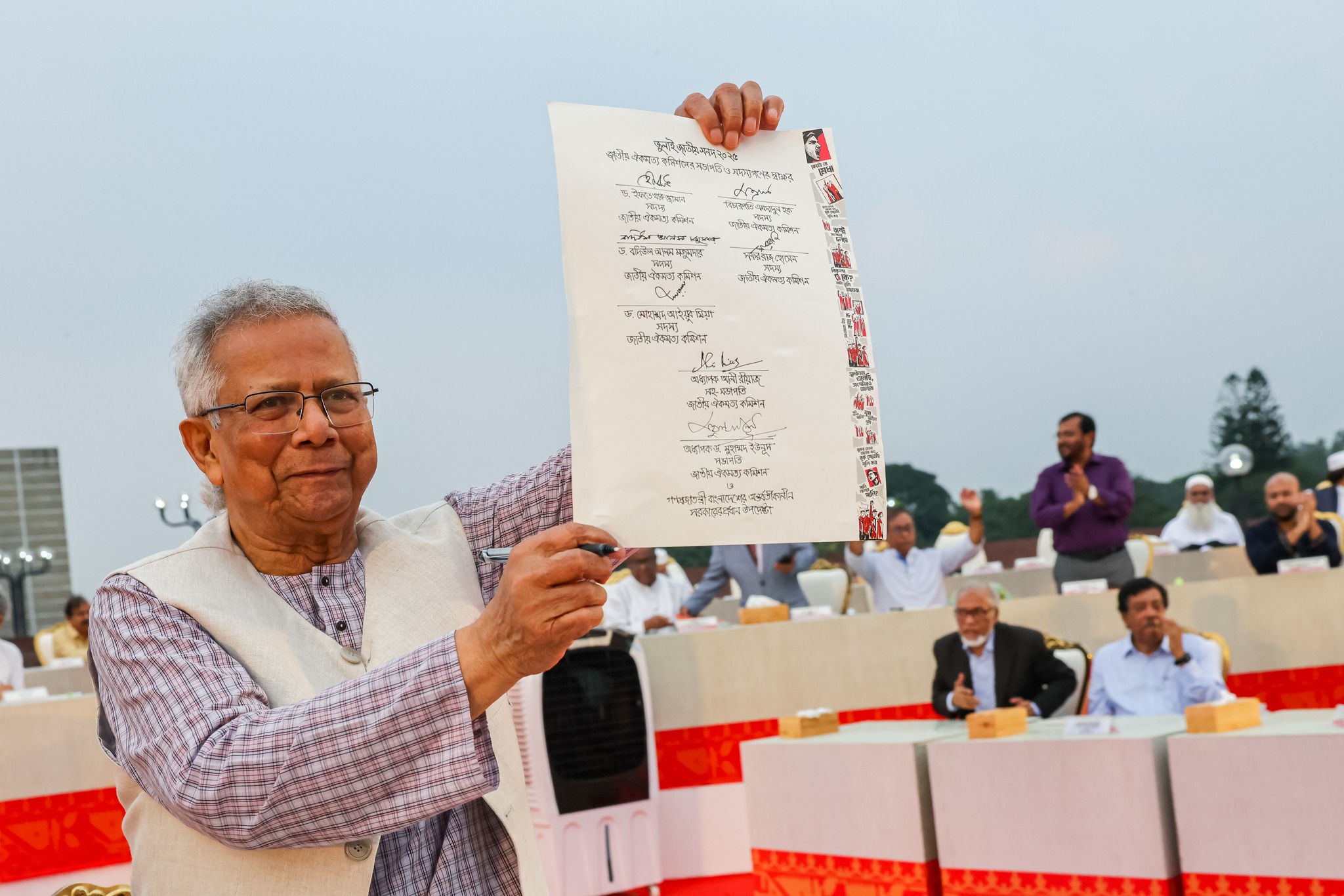
Supporters say the Charter reflects the aspirations of a population seeking a more accountable and decentralized political system. Critics argue that some provisions require deeper consultation and risk creating parallel centers of power.
Next Steps
With voter approval now secured, the new government must begin drafting constitutional amendment bills, setting up transition committees, and initiating national consultations.
Legal experts say the first set of legislative changes could be tabled in Parliament within weeks, but consensus-building across parties remains essential.
The coming months will determine whether Bangladesh’s political class can translate public support for reform into lasting institutional change—or whether internal rifts will slow momentum.