

US Secretary of State Marco Rubio has assured European leaders that Washington remains committed to the transatlantic alliance, declaring that America’s destiny “will always be intertwined” with Europe’s.
Speaking at the Munich Security Conference, Rubio said the United States does not seek to weaken ties but to “revitalise an old friendship and renew the greatest civilisation in human history.”
“For us Americans, our home may be in the Western Hemisphere, but we will always be a child of Europe,” he told delegates.
His remarks struck a notably warmer tone than last year’s address by US Vice-President JD Vance, who had sharply criticised European leaders at the same forum.
European Commission President Ursula von der Leyen said she was “very much reassured” by Rubio’s speech, describing him as “a good friend, a strong ally.”
Criticism on Immigration, Trade and Climate
Despite the conciliatory tone, Rubio repeated several criticisms frequently voiced by President Donald Trump’s administration:
- He described current European immigration policies as a potential threat to civilisation.
- He criticised what he called a “climate cult” shaping economic policy.
- On trade, he argued that both sides had embraced a “dogmatic vision of free and unfettered trade.”
Rubio also renewed calls for Europe to increase defence spending, stating:
“We want allies who can defend themselves so that no adversary will ever be tempted to test our collective strength.”
Von der Leyen responded by emphasising the importance of a “strong Europe,” underscoring that European defence capabilities must continue to grow.
Ukraine War and Russia
Addressing the war in Ukraine, Rubio said the US was still uncertain whether Vladimir Putin was serious about ending the conflict.
“We don’t know if the Russians are serious about ending the war. But we’re going to continue to test it.”
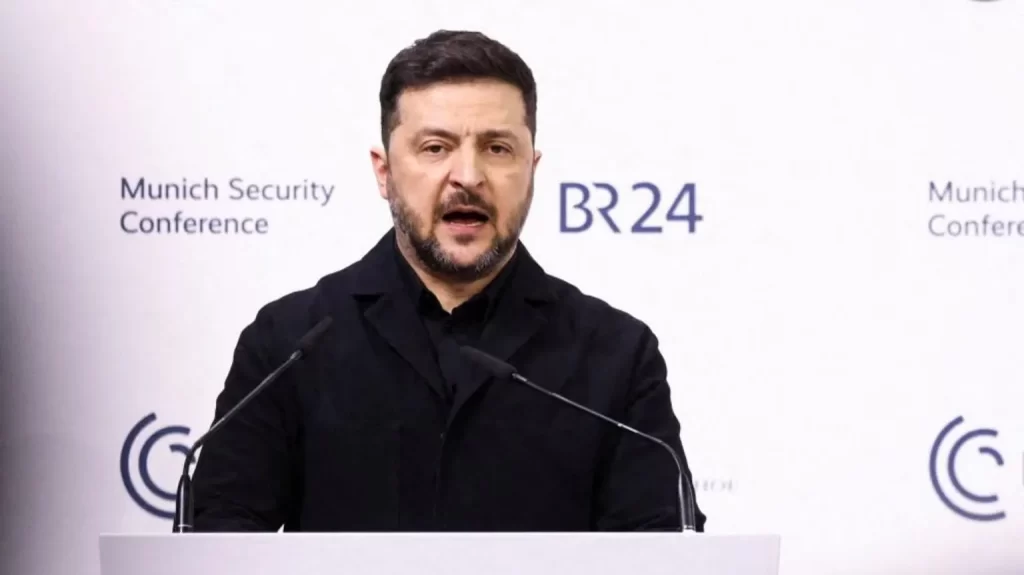
Ukrainian President Volodymyr Zelensky told the conference that Kyiv did not believe Moscow would leave Ukraine alone, describing Putin as a “slave to war.”
Zelensky rejected reports that elections could be held as early as May, saying martial law made voting impossible without at least two months of ceasefire and proper security guarantees.
UK Prime Minister Keir Starmer echoed calls for stronger European defence, urging the continent to “stand on its own two feet” and build “hard power.”
Arctic Tensions and Greenland
Starmer also announced a joint initiative with the US, Canada and other Nato allies to deploy warships, submarines and aircraft to the Arctic and High North, amid increased Russian military activity in the region.
President Trump has argued that Greenland is strategically critical for US security and has not ruled out using force to secure control, though negotiations are ongoing.
Denmark’s Prime Minister Mette Frederiksen firmly rejected the idea that Greenland could be “assigned a price,” stressing that sovereignty must be respected.
Spain’s Prime Minister Pedro Sánchez called for building a “true European army,” while Finland’s President Alexander Stubb said Nato currently faces no immediate direct threat from Russia but must prepare through large-scale exercises.
Iran Talks and UN Criticism
Rubio also criticised the United Nations, saying it had played “virtually no role” in resolving conflicts in Gaza and Ukraine and had failed to constrain Iran’s nuclear programme.
A second round of nuclear talks with Tehran is set to be hosted by Oman in Geneva next week, according to Swiss officials.
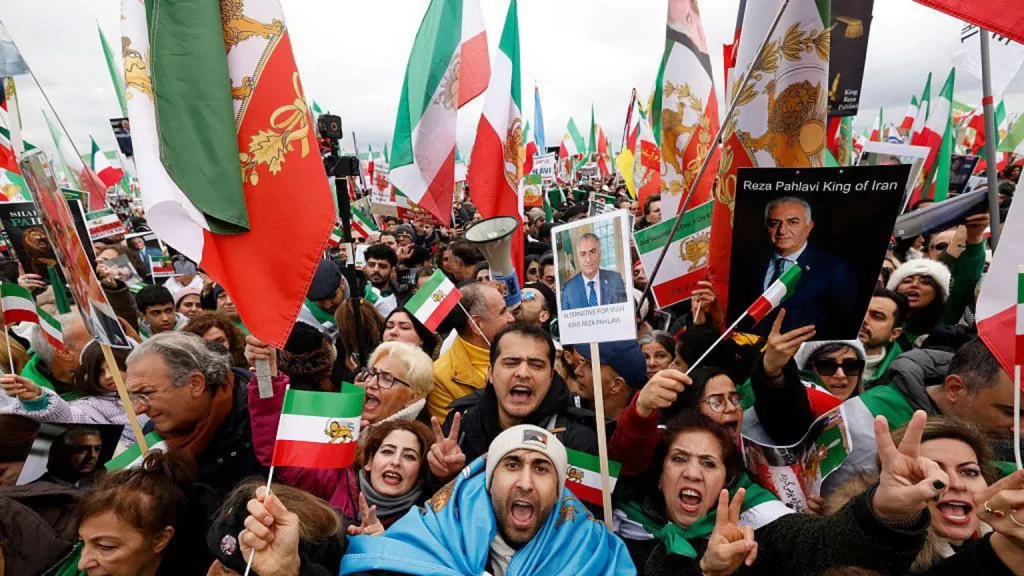
Outside the conference venue, an estimated 200,000 protesters rallied against Iran’s government, denouncing recent crackdowns.
A Delicate Balancing Act
Rubio’s speech sought to strike a balance — reassuring European allies of America’s enduring commitment while maintaining the Trump administration’s tougher rhetoric on defence burden-sharing, trade and migration.
As geopolitical tensions persist from Ukraine to the Arctic and the Middle East, the message from Munich was clear: the transatlantic alliance is under strain — but not broken.