

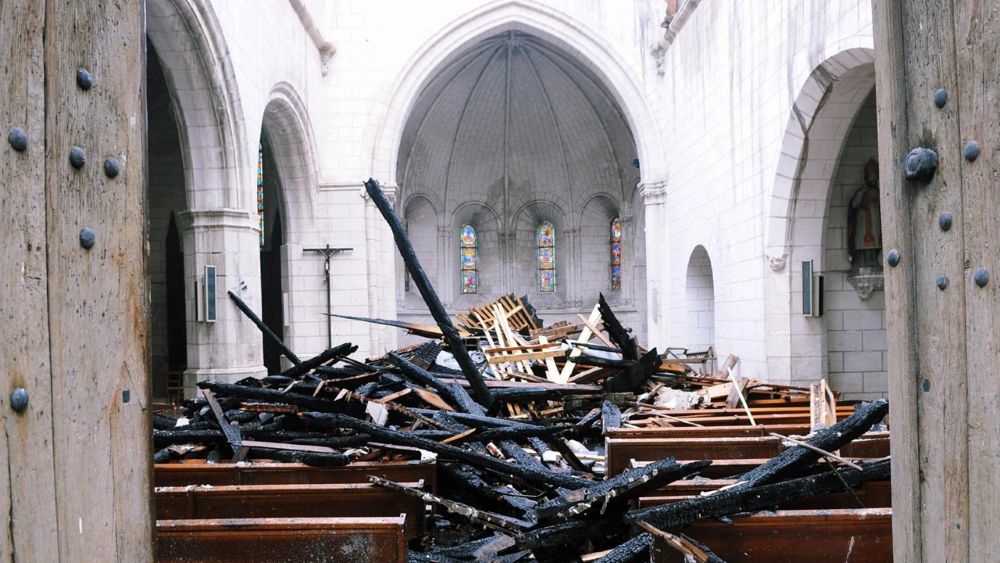
Church arson attacks have doubled across Europe in 2024, and anti-Christian hate crimes have included 274 assaults on individuals as well as the killing of a 76-year-old Spanish monk.
A new report from the Vienna-based Observatory on Intolerance and Discrimination Against Christians in Europe documents 2,211 anti-Christian hate incidents in 2024, including 94 attacks on churches—nearly twice the number recorded in 2023.

One-third of all arson attacks targeting churches occurred in Germany. France, the United Kingdom, Germany, Spain, and Austria recorded the highest number of anti-Christian incidents overall.
Though most attacks were directed at places of worship, the report also documents 274 personal attacks against Christians in 2024, including assaults and threats.
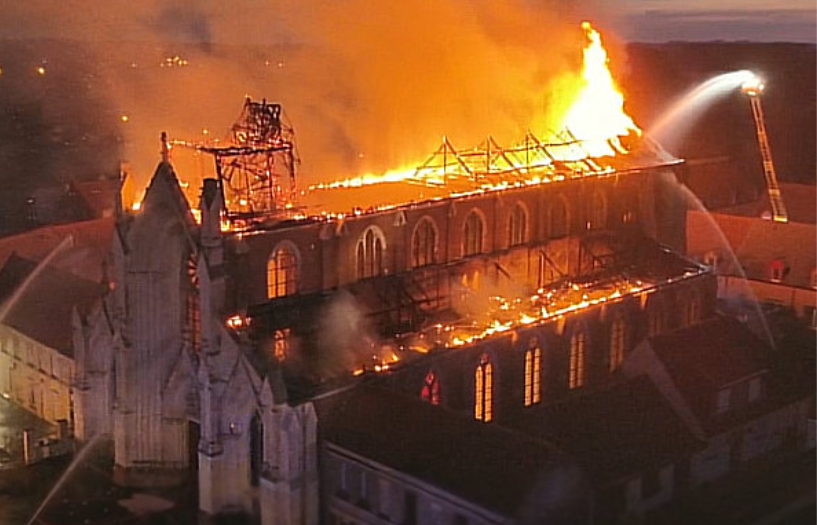
Severe cases include the killing of a 76-year-old monk in Spain in November 2024 and the destruction of a historic church by fire in Saint-Omer, France, in September 2024.
Executive Director Anja Tang highlighted that the figures represent very concrete acts of vandalism, arson, and physical assault that deeply affect local communities.

New surveys from Poland and Spain reveal that nearly half of priests have encountered aggression.
The report also underscores growing legal and social pressure on Christians across Europe between 2024 and 2025.
In the UK, this includes the prosecution of individuals for silently praying in the so-called buffer zones near abortion facilities, ongoing hate speech proceedings against Finnish Member of Parliament Paivi Rasanen for quoting the Bible, and the high-profile employment case of UK teacher Kristie Higgs.
In its recommendations, the Observatory on Intolerance and Discrimination Against Christians in Europe calls for stronger, more coordinated European Union action, including the appointment of a European Union coordinator to combat anti-Christian hatred.
The organization is urging national governments to implement the OSCE’s newly released guide, Understanding Anti-Christian Hate Crimes and Addressing the Security Needs of Christian Communities. It also stresses that collecting consistent and comparable data on crimes committed against Christians should become a central governmental priority.